If you tune into the financial news today, you are likely met with a chorus of optimism. Stock market indices are hovering near historic highs, and headline Gross Domestic Product (GDP) numbers appear remarkably resilient. It is tempting to look at these surface-level metrics, trust the historical playbook, and assume the returns of the past decade will seamlessly repeat themselves.
But at Brickell Financial Group (BFG), we believe headline GDP may not tell the full story. The issue is not simply whether GDP is growing or markets are near highs. The issue is what kind of growth we are getting, what is driving it, and whether portfolios are built for an environment where inflation and interest rates remain structurally higher than investors became accustomed to during the zero-rate era.
Let’s look beyond the headlines to break down the complex geopolitical crosscurrents, the composition of U.S. economic growth, and what a “higher-for-longer” regime may mean for your financial plan.
The Strait of Hormuz: A Deeper Macro Signal
To understand where inflation may be heading, we must look at the physical world. For months, the Strait of Hormuz—a vital artery for global energy—has faced a severe blockade. Historically, the market views Middle Eastern energy disruptions as reversible events: a treaty is signed, ships resume sailing, and prices normalize.
However, as detailed in our recent BFG Strait of Hormuz Research Report, the current crisis may represent a deeper macro signal regarding energy infrastructure fragility. During the regional conflict, roughly 17% of Qatar’s Liquefied Natural Gas (LNG) export capacity was physically damaged. The reality is that you cannot fix destroyed physical infrastructure with a diplomatic signature.
Rebuilding these massive, multi-billion-dollar cryogenic processing facilities requires highly specialized industrial gas turbines. The challenge? The global manufacturers capable of producing these turbines face a severe three-to-five-year backlog, largely because Silicon Valley tech giants are aggressively buying them up to power massive new Artificial Intelligence (AI) data centers.
The Macro Implication: Sticky Inflation and GDP Fragility
Because the global economy cannot simply manufacture its way out of this physical deficit overnight, we may be locked into a structural, multi-year energy shortage. In our view, this acts as a persistent, unlegislated tax on manufacturing, transportation, and agriculture. It increases the probability of a stagflationary environment—where economic growth cools, but sticky, elevated inflation becomes the new baseline.
This fragility is somewhat masked by current U.S. GDP numbers. When you dissect the composition of that growth, much of it is supported by healthcare, government spending, and AI capital expenditures (Capex).
- Healthcare: Healthcare growth is economically necessary, but not all GDP growth is created equal. When healthcare employment rises because the population is aging and chronic disease is increasing, that looks less like offensive investment and more like maintenance-style spending. It keeps the system functioning, but it does not necessarily expand future productive capacity in the same way as innovation, infrastructure, or new business formation.
- Government Spending: The U.S. government continues to operate at historic deficits. Pumping borrowed capital into a supply-constrained global economy may artificially boost GDP today, but it puts additional fuel on the inflationary fire tomorrow.
- The AI Capex Cycle: This leaves AI-related capital spending as one of the most important marginal drivers of U.S. growth expectations. If that spending slows before monetization catches up, the economy may look less resilient than headline GDP suggests. (We will explore this risk in greater detail in a separate BFG Next Level Insights piece focused specifically on the AI Capex cycle).
The Market Implication: The Return of Financial Gravity
If you want to know what institutional markets are pricing in, look at the long-term bond market. When inflation expectations remain elevated, lenders demand higher yields to compensate for the erosion of their future purchasing power.
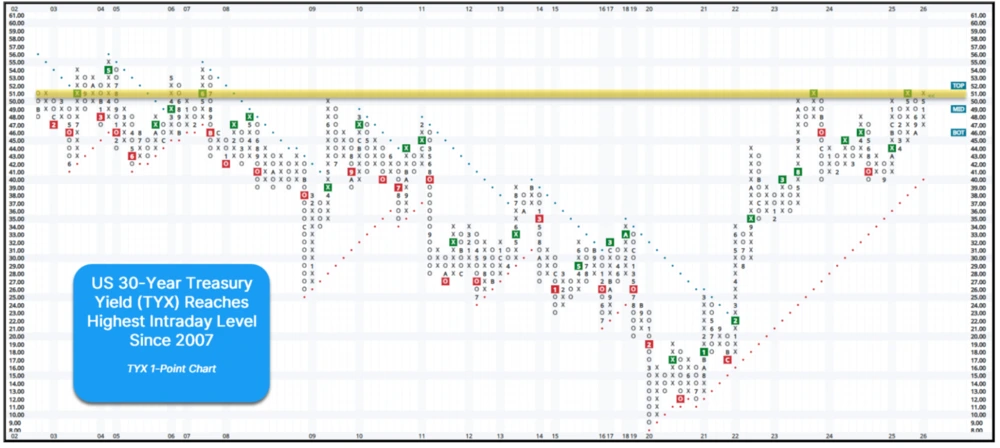
This is exactly what we are witnessing. The U.S. 30-year Treasury yield recently surged past the 5.15% mark, hitting intraday levels not seen since 2007. By demanding yields over 5% to lock up capital for three decades, the bond market is loudly signaling that it expects inflation and rates to remain sticky.
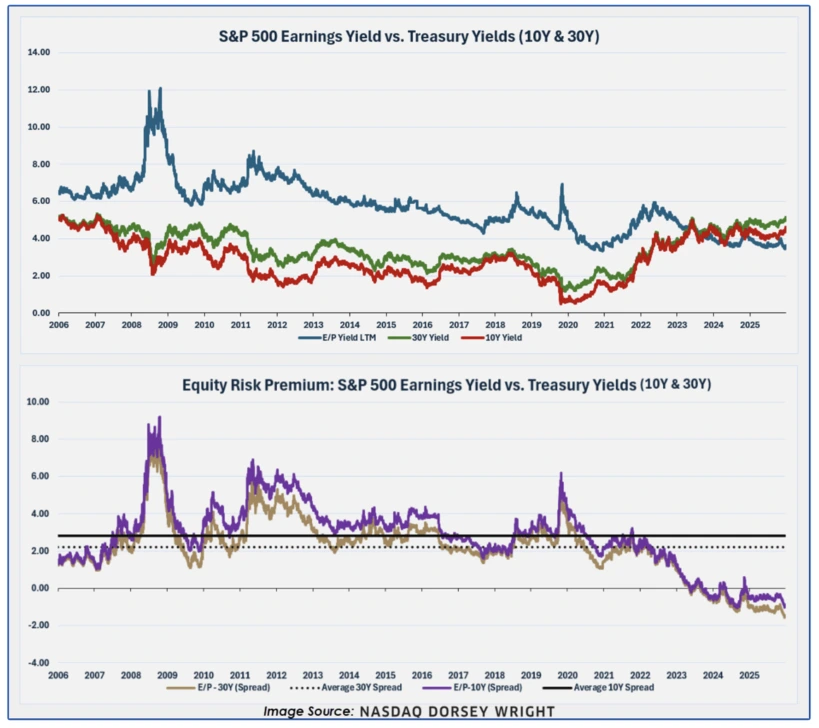
Historically, a 5% risk-free rate acts like financial gravity on asset valuations. When long-term Treasury yields compete with or exceed the earnings yield available in broad equity markets, fixed income deserves renewed evaluation. That does not mean investors should abandon equities, but it does mean the relative value of income-producing assets has changed materially.
Investment and Planning Implications: What This Means for Your Stage of Wealth
A higher-for-longer world does not affect every investor the same way.
For Young High Earners: Cash-Flow Rich, Balance-Sheet Poor
If you are a younger high earner—a physician, attorney, executive, or business owner still early in the accumulation phase—the main priority is not reacting emotionally to every macro headline. If you are still in the accumulation phase, your greatest asset is your future cash flow.
The focus should be on strengthening your personal balance sheet, managing liabilities, building liquidity, protecting your income, and consistently converting high income into long-term financial assets. In that stage, volatility can be uncomfortable, but it can also create opportunity. Major market pullbacks may allow disciplined investors to buy future wealth at better prices. This is where a disciplined cash-flow strategy—such as a customized version of the 50/30/20 rule—can help move you from high income to true financial independence.
For Pre-Retirees and Retirees: Net-Worth Rich, Sequence-Risk Exposed
If you are approaching retirement or already retired, the equation is different. The issue is not just market volatility. It is volatility combined with withdrawals, inflation, and sequence-of-returns risk.
A higher-rate environment can pressure equity valuations and long-duration bond prices, but it can also create income opportunities that investors have not seen in decades. The key is not to chase yield blindly. The key is to evaluate whether today’s yields can support your retirement income needs under different inflation, tax, and market scenarios.
The question is not, “Should I own stocks or bonds?” The better question is, “What combination of growth, income, liquidity, and inflation protection gives me the highest probability of maintaining my lifestyle through different economic environments?”
The BFG Next Level Framework
This is why macro analysis should not live in isolation. The real question is not simply whether inflation rises, GDP slows, or Treasury yields move higher. The real question is how those forces affect your path to the next level of financial independence—and ultimately, financial freedom.
Subscribe to BFG Next Level Insights for deeper macro commentary, financial-planning perspectives, and market insights designed to help you understand what today’s headlines may mean for your path toward financial independence and long-term financial freedom.
Disclaimer: This material is for educational and informational purposes only and does not constitute personalized financial, investment, tax, or legal advice. Historical returns are not indicative of future results. All expressions of opinion reflect the judgment of the authors as of the date of publication and are subject to change. Investing involves risk, including the potential loss of principal. Always consult with a licensed, qualified financial professional before making any investment decisions. Brickell Financial Group operates in compliance with the Florida Office of Financial Regulation (FLOFR).